Written and performed by Anne Curtis
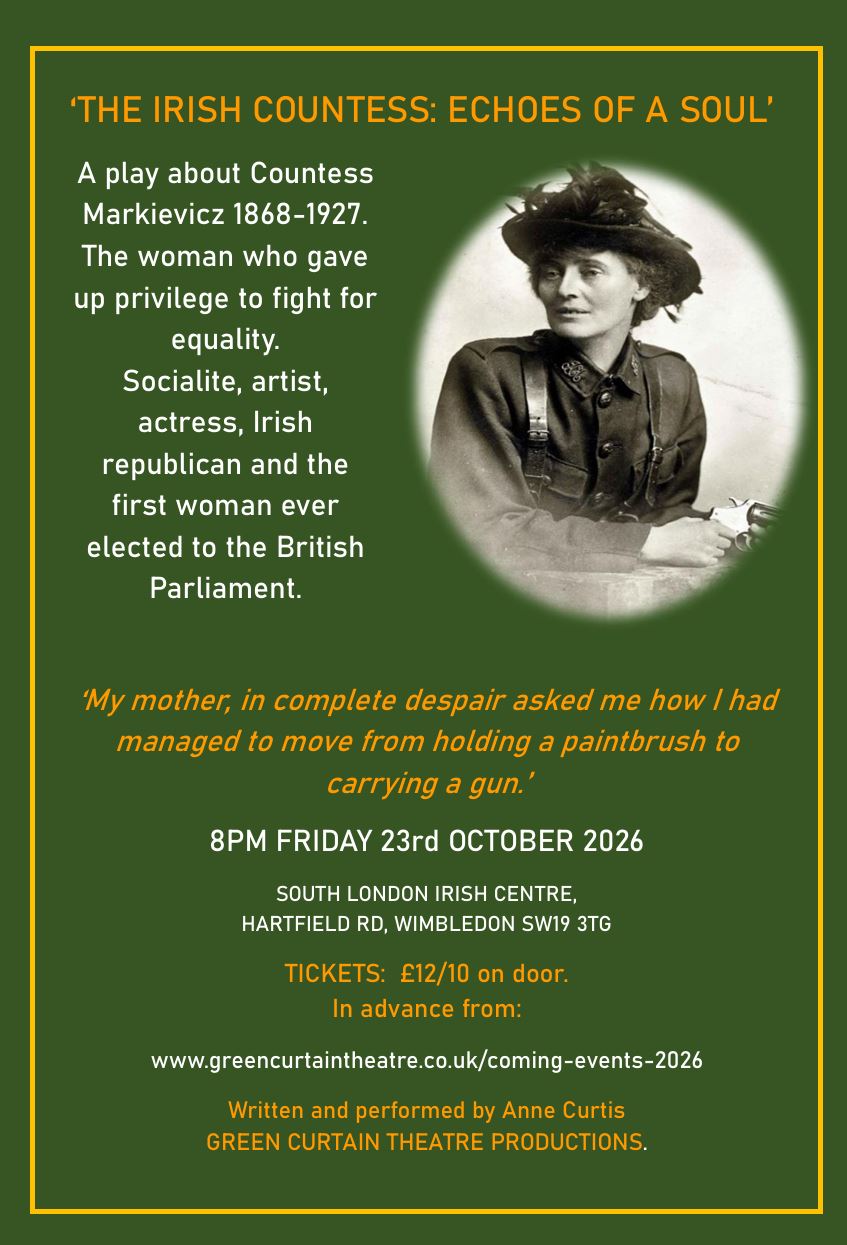
8PM FRIDAY 23RD OCTOBER
SOUTH LONDON IRISH CENTRE, HARTFIELD ROAD, LONDON SW19 3TG
BUY TICKETS
Tickets £12 / £10 are available on the door.
Click here to buy in advance.
Enquiries to anne@greencurtaintheatre.co.uk
About the Play
This play is a dramatisation of AN conversation that Constance Markievicz might have had with her dead sister Eva.
It is September 1926. Ireland is beginning to steady herself after 10 years of upheaval, but Irish Republican Constance Markievicz feels no such calm. The grief from the loss of her sister Eva, two months earlier still weighs heavily on her shoulders.
Hoping for some quiet resolution, Constance visits Eva’s London flat. Since childhood, the sisters believed they shared a telepathic bond that allowed them to communicate with each other when they were not in the same room.
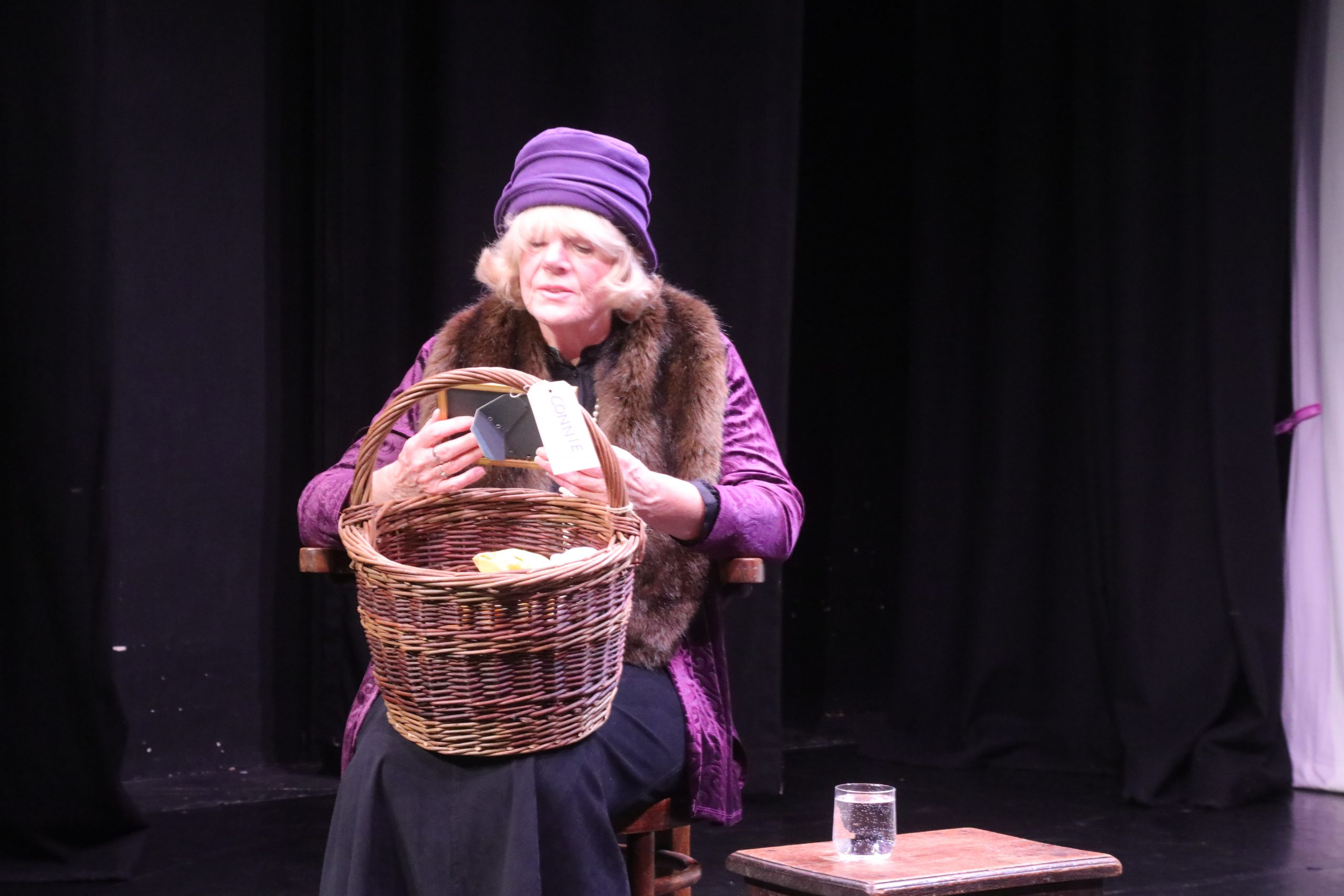 Eva has left Constance a basket of keepsakes, each object seemingly chosen to remind Constance of the key turning points of her life.
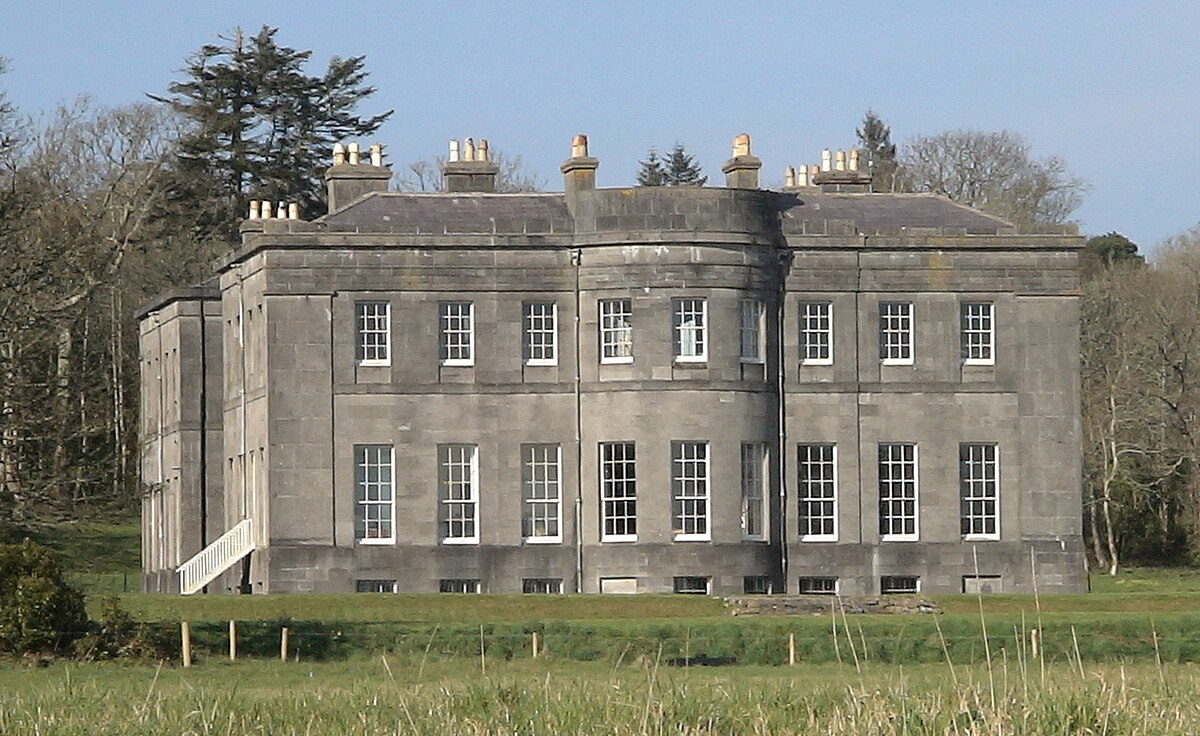
Born into privilege in Sligo, Constance defied every expectation of her class. Leaving home to study art in London and Paris, marrying the penniless Count Casimir Markievicz, before returning to a Dublin alive with new ideas and the growing demand for Irish freedom.
She threw herself into activism — suffrage, workers’ rights, the Irish Citizen Army. In 1916. she was sentenced to death for her part in the Easter Rising. Her sentence commuted because she was a woman.
Prison followed, then political triumph. In 1918 she became the first woman elected to the British Parliament, which she rejected choosing to serve instead as Minister for Labour in the first Dail Eireann, so becoming one of the world’s earliest female cabinet ministers.
But the Treaty of 1921 split the country. Constance stood firmly on the anti Treaty side. Civil war and imprisonment took their toll, yet she remained unbowed.
It is in Eva’s quiet flat that Constance feels the weight of all she has lived through — the battles, the losses, the unfinished dream of an independent Ireland. Setting the last keepsake aside, she steps quietly into her final year: a revolutionary, an artist, and a woman who refused to live a small life.
“A must see for Irish of all generations who would like to know more about their history”
“A moving and engaging performance.”